We won’t pay for your crisis
Bari, 10th July 2026.
On June 10th, the Puglia regional government published a measure recalculating regional IRPEF surcharge rates, adopted to cover a healthcare deficit of roughly €349 million recorded in 2025. Regional president Antonio Decaro, acting as extraordinary healthcare commissioner, announced the increase as necessary. It spares incomes up to €15,000 a year but rises progressively above that — reaching, for incomes over €50,000, an additional rate of 3.33 percent, the maximum allowed by law.
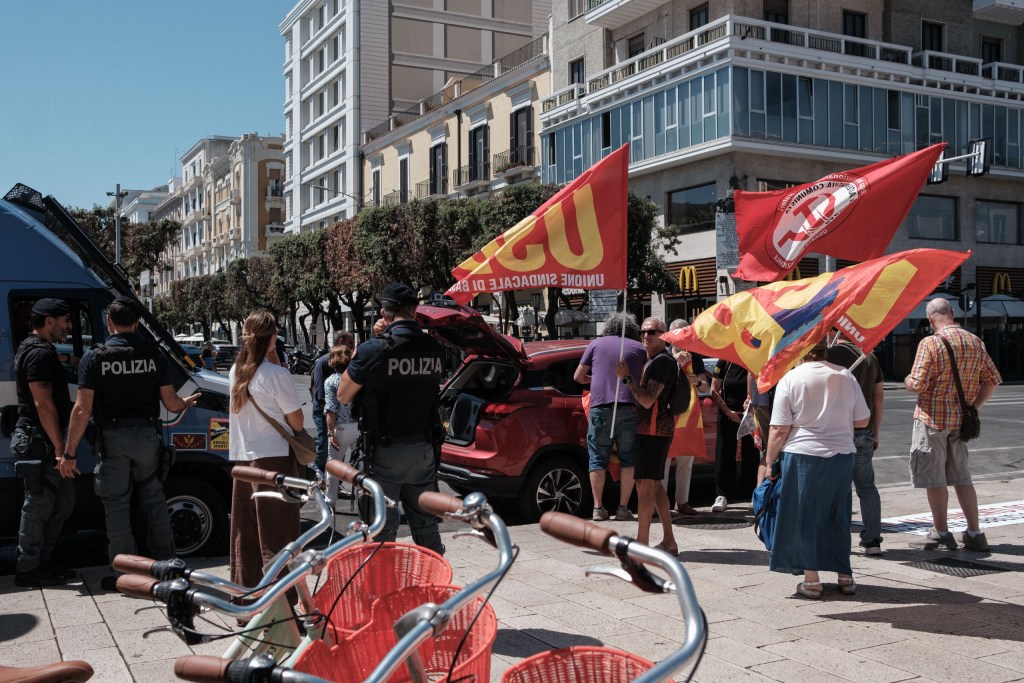
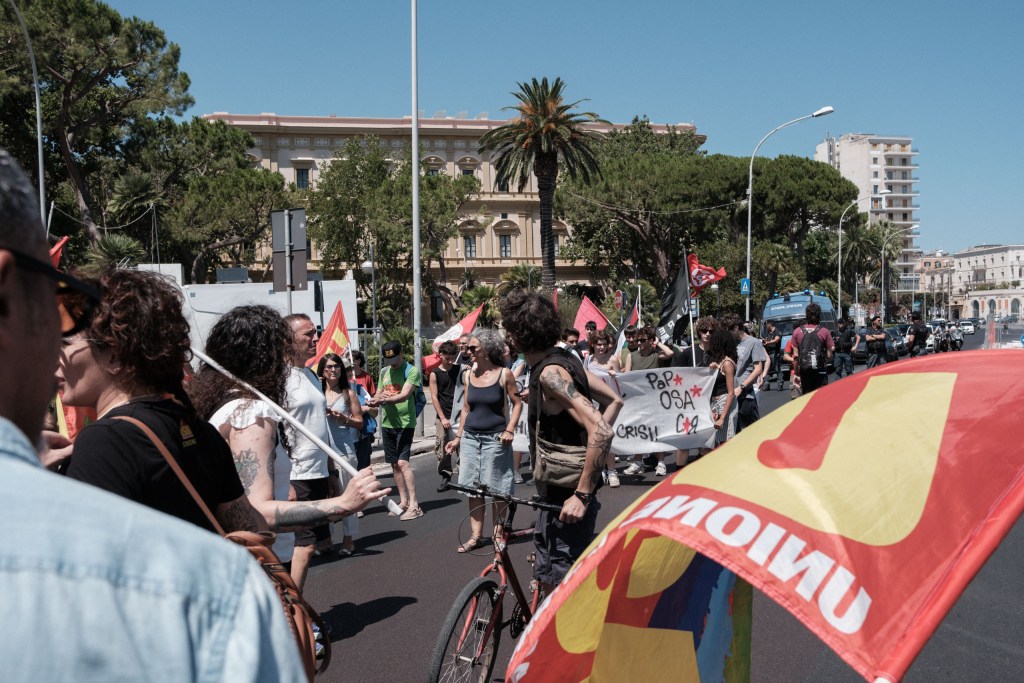
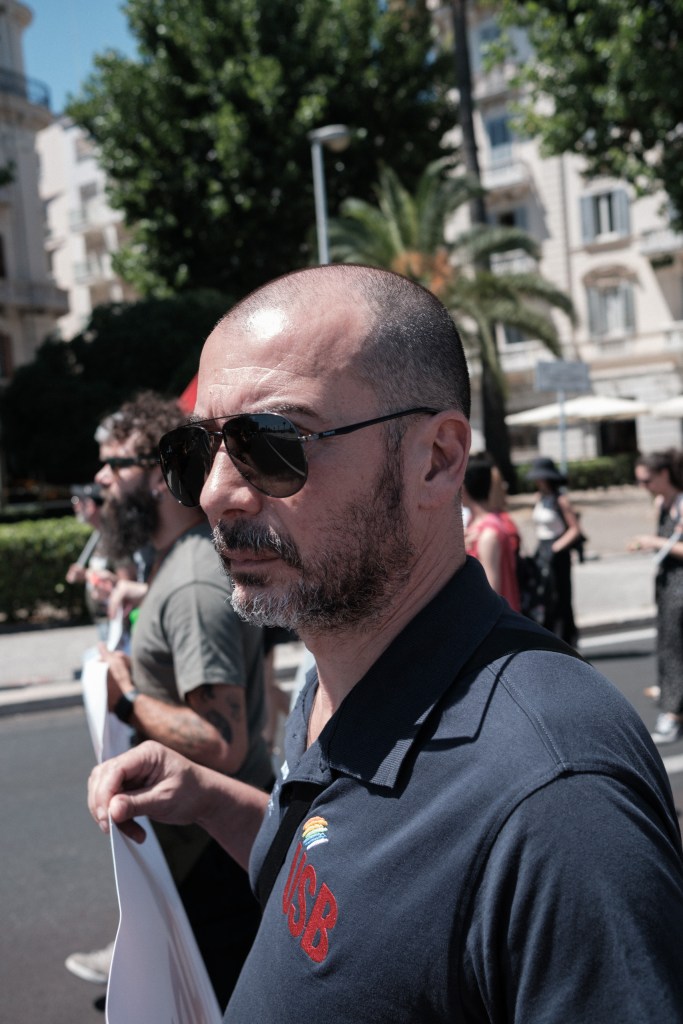
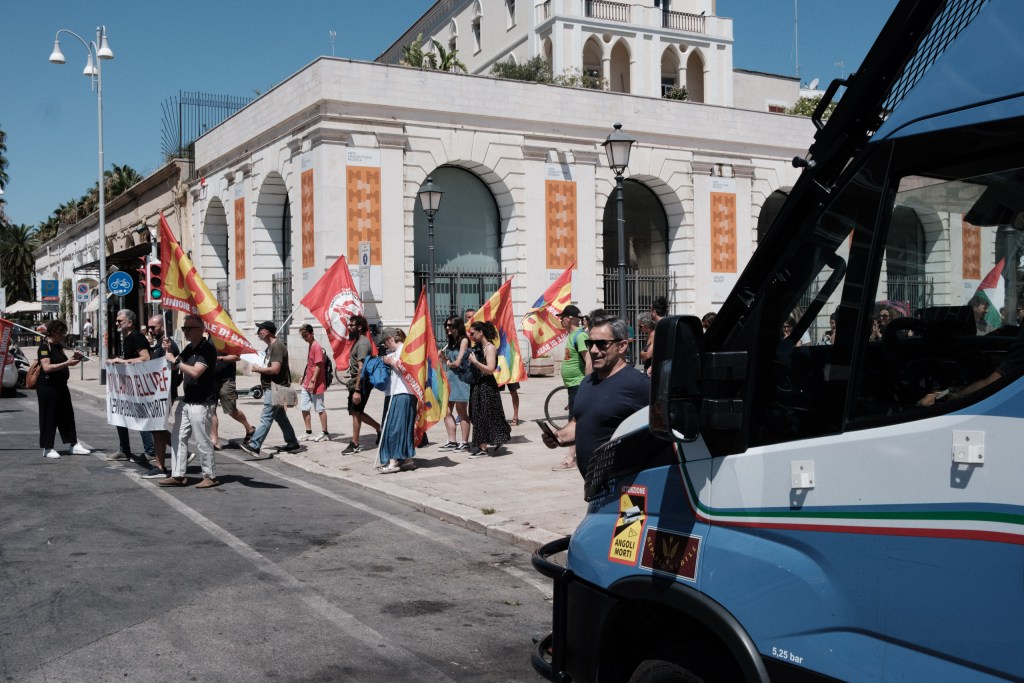
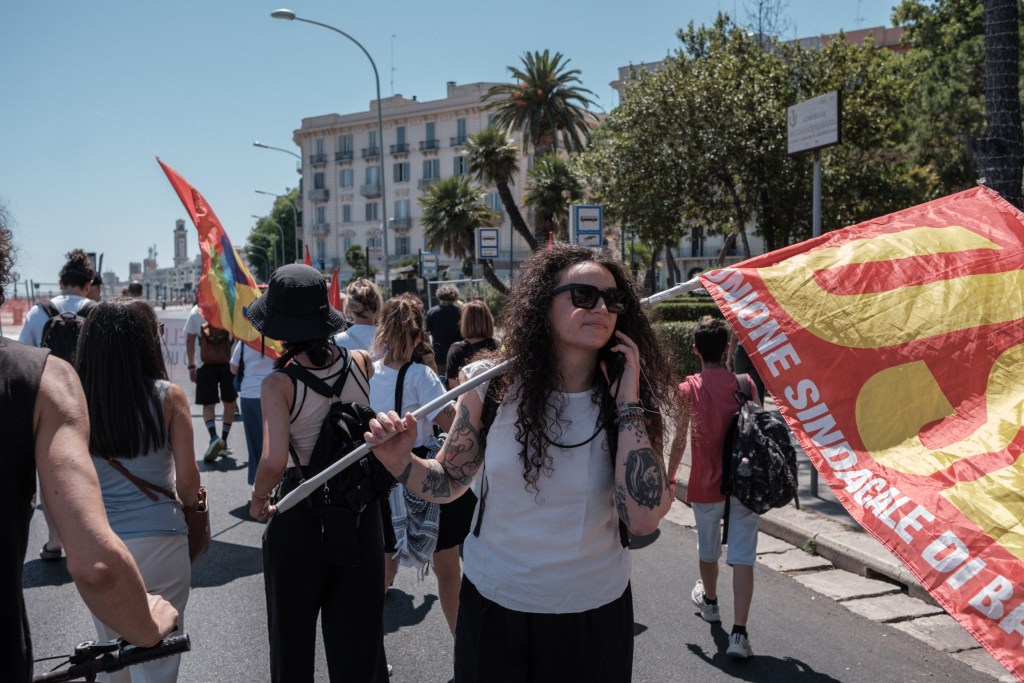
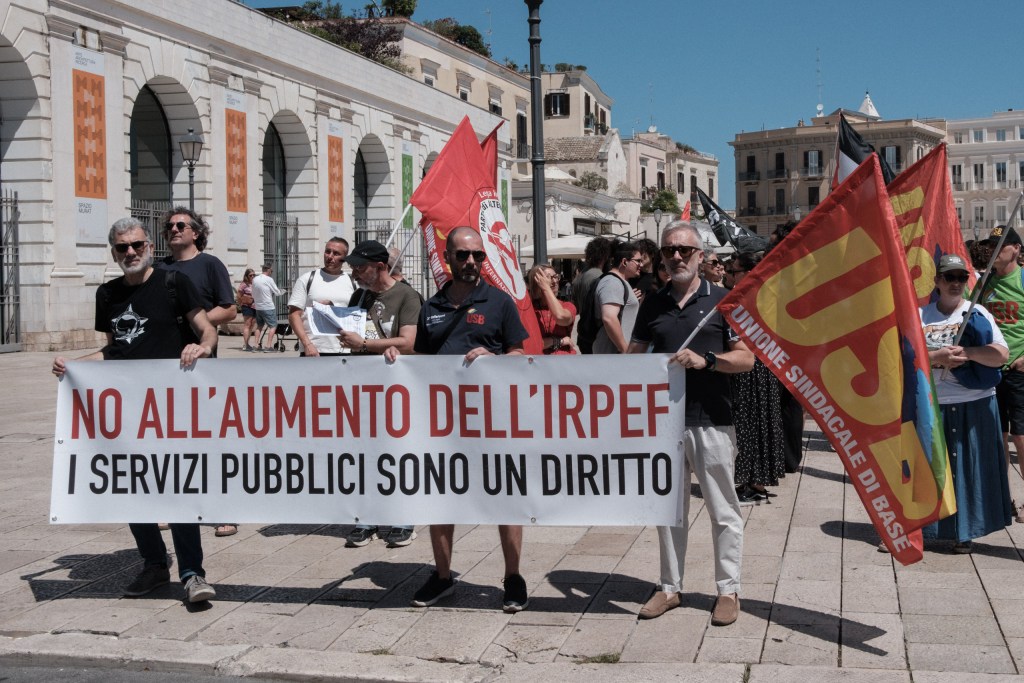
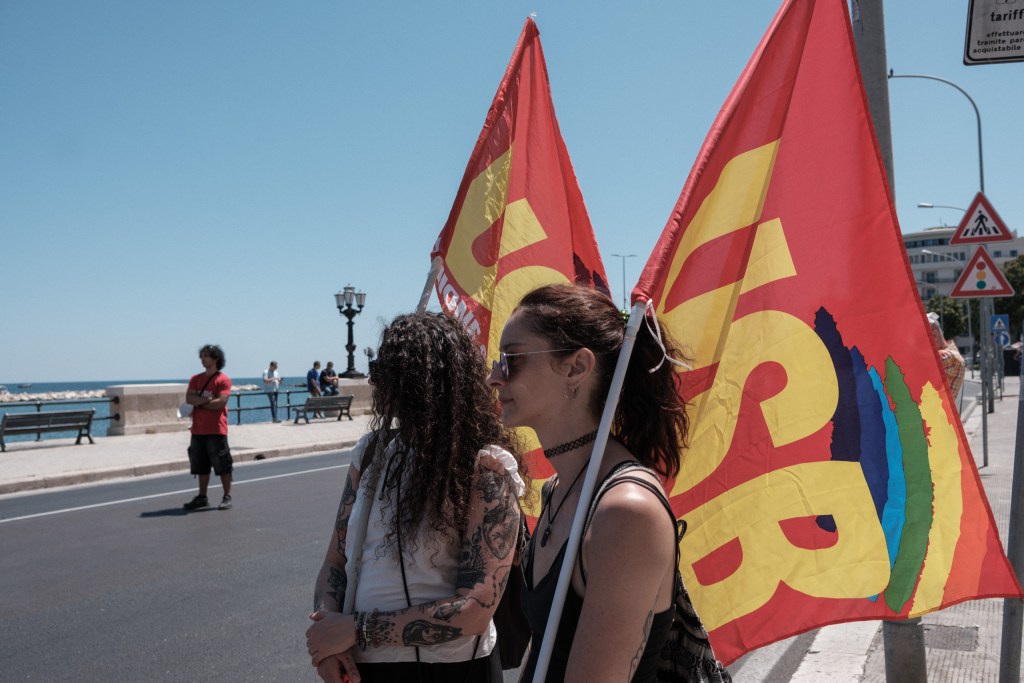
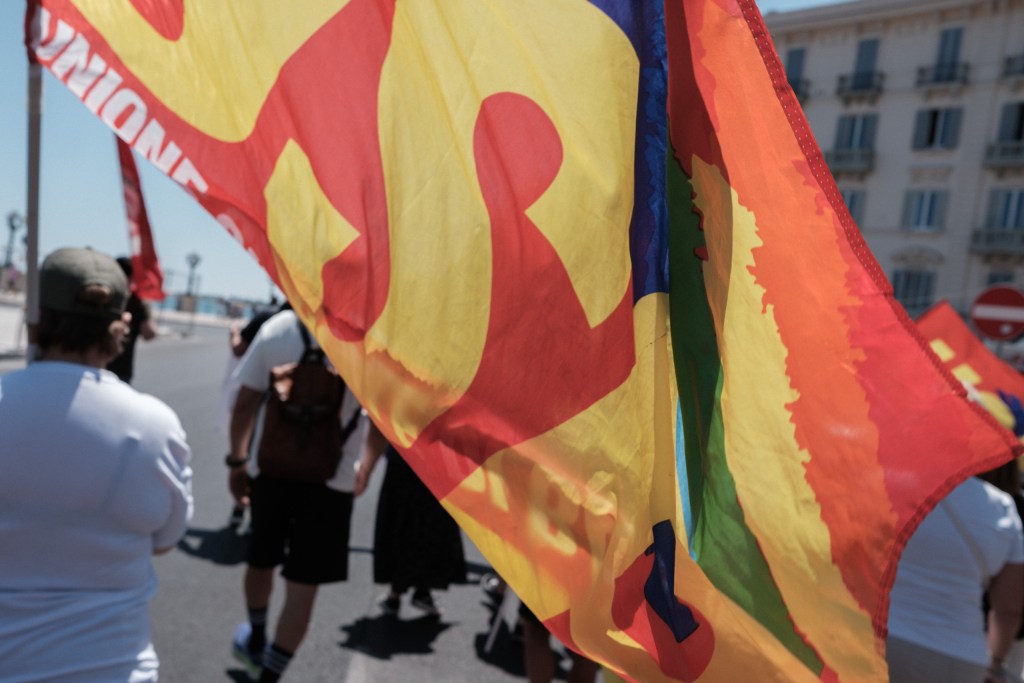
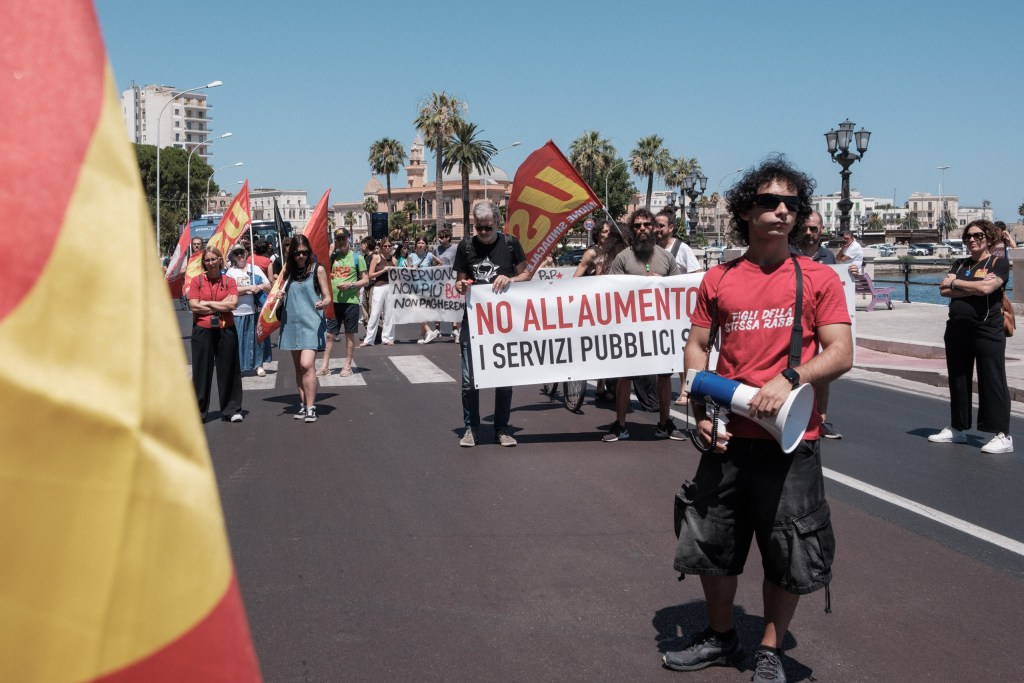
This is the backdrop against which USB — Unione Sindacale di Base — called a demonstration through Bari. Red and yellow flags come out of car trunks before nine in the morning; a police van waits at the corner, doors already open.
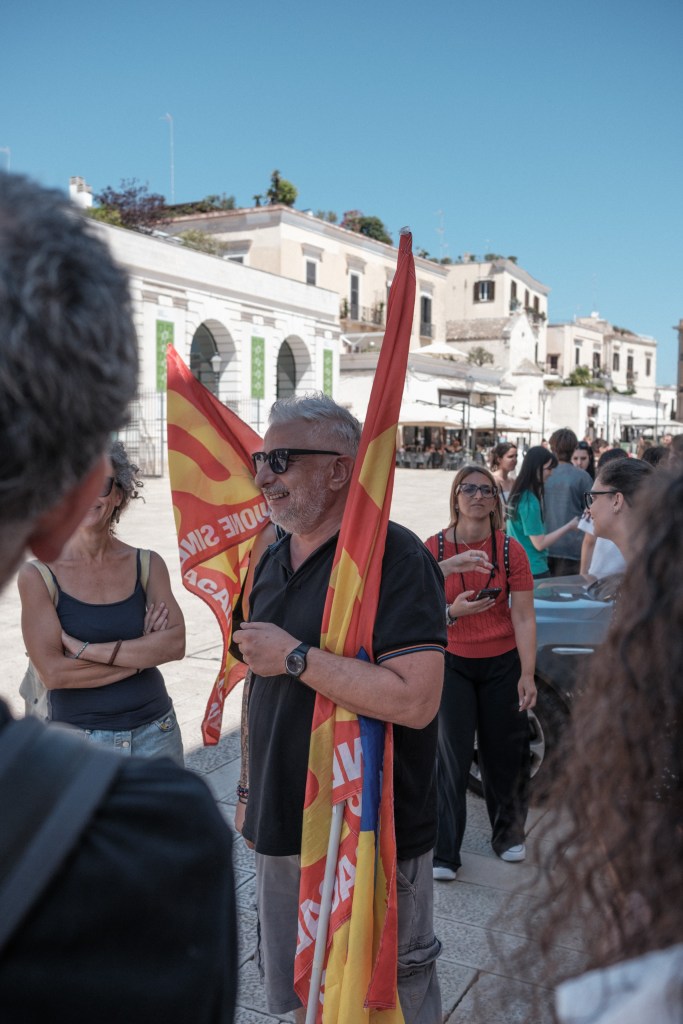
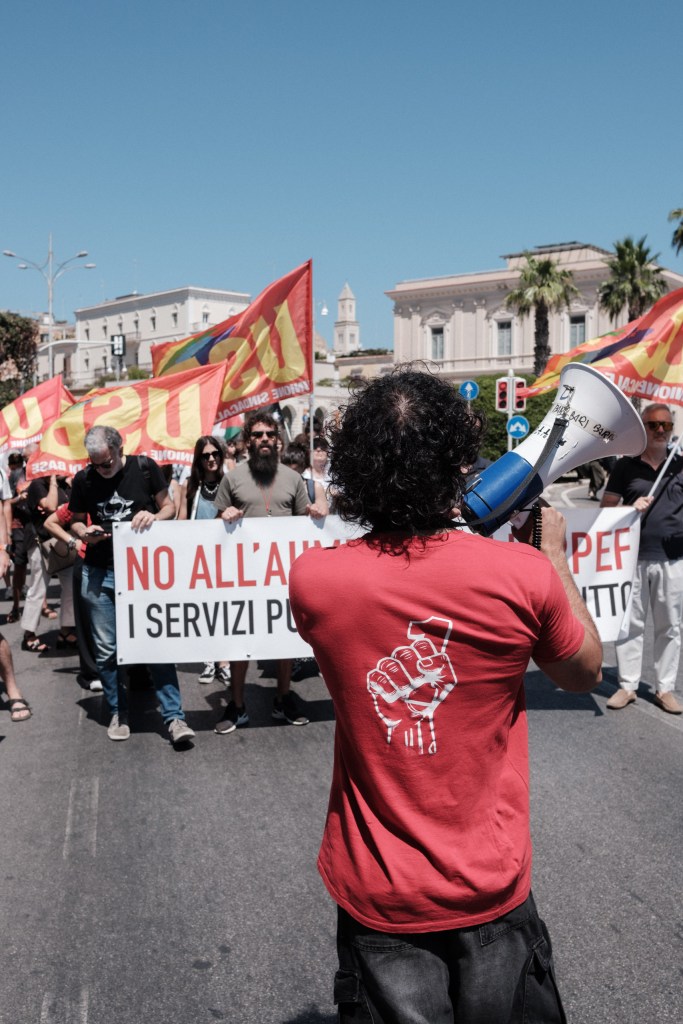
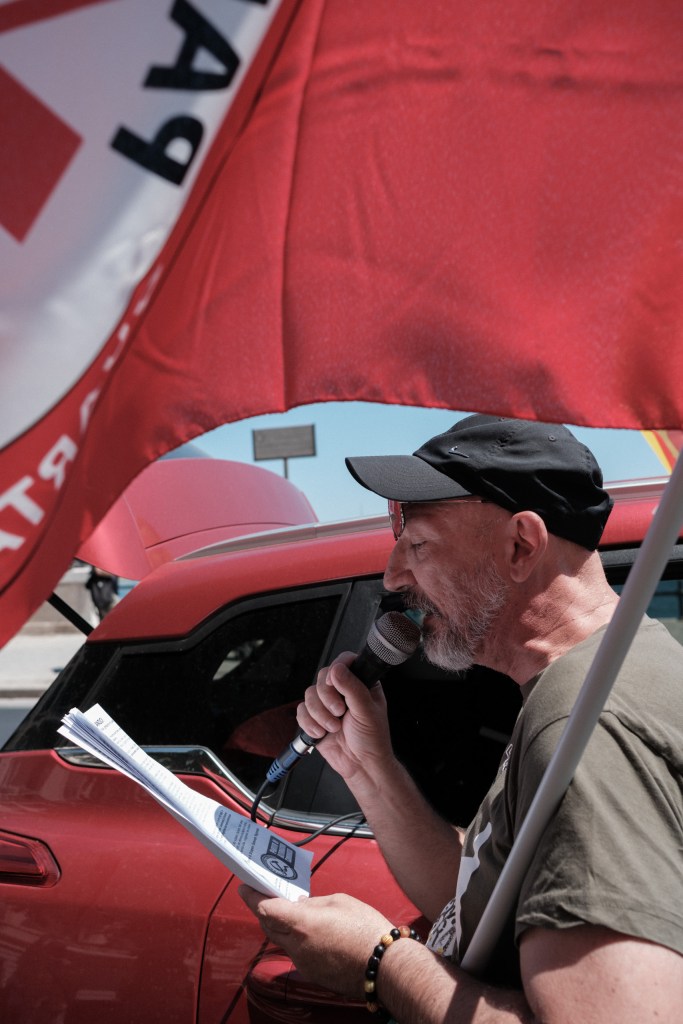
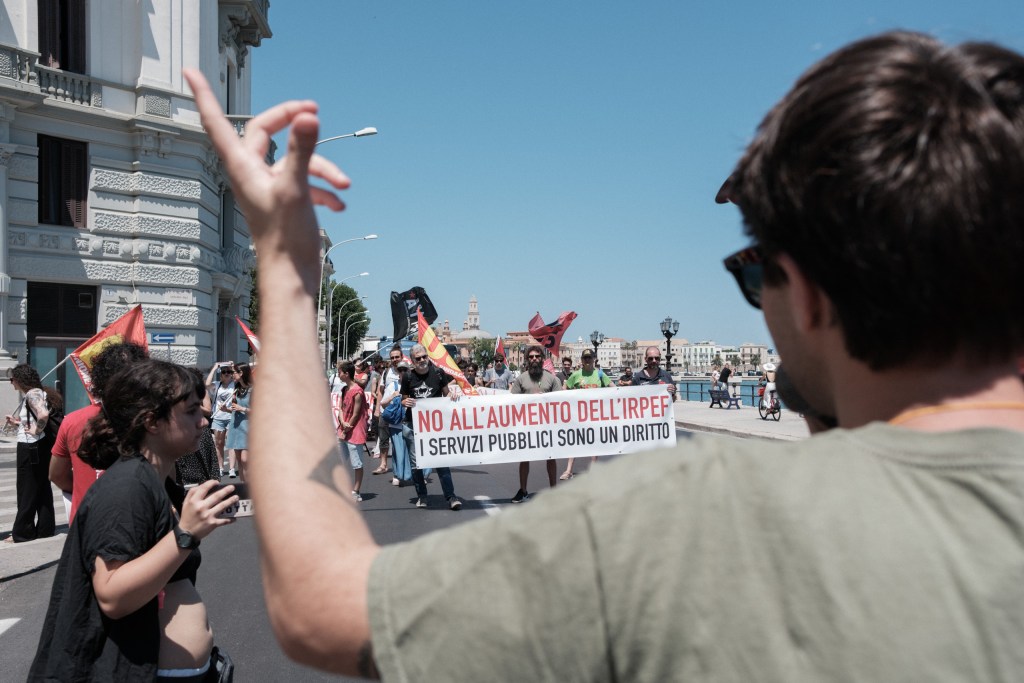
No all’aumento dell’IRPEF. The words stretch across a white banner outside Spazio Murat. A megaphone passes between speakers and the various collectives who’ve joined the march. Unions had already voiced opposition to the hike in the weeks before it was formalized, even while acknowledging the region’s stated effort to shield lower incomes.
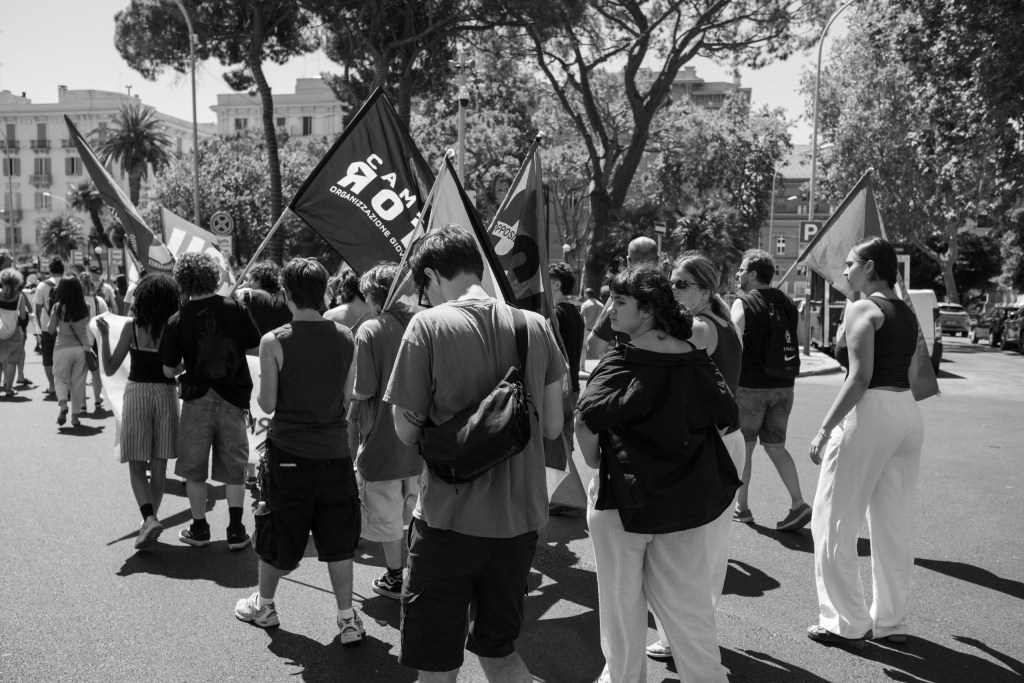
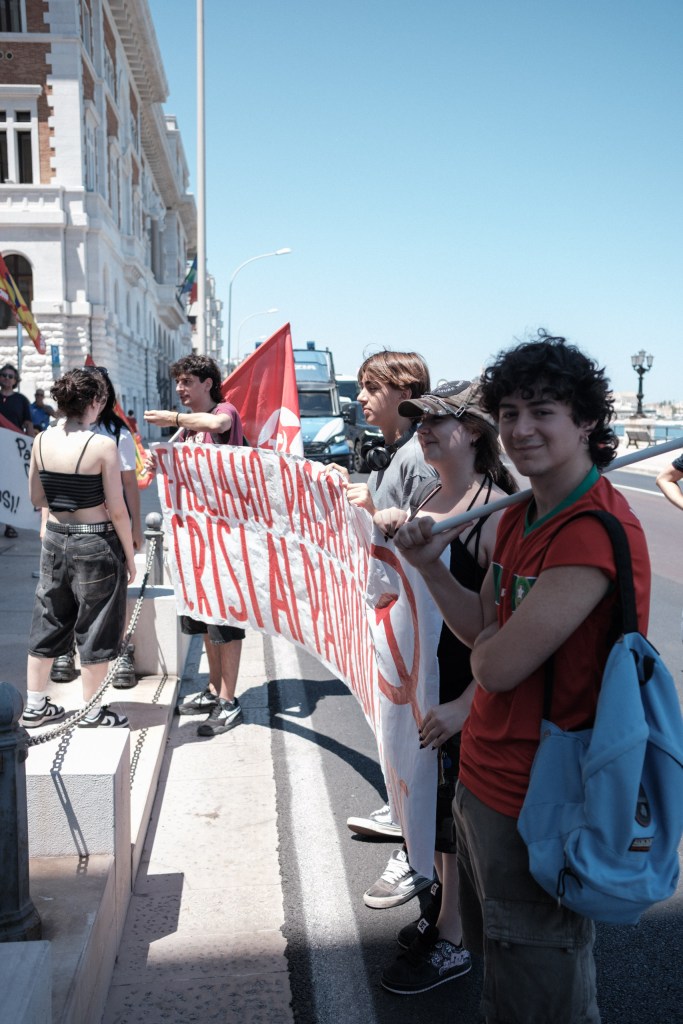
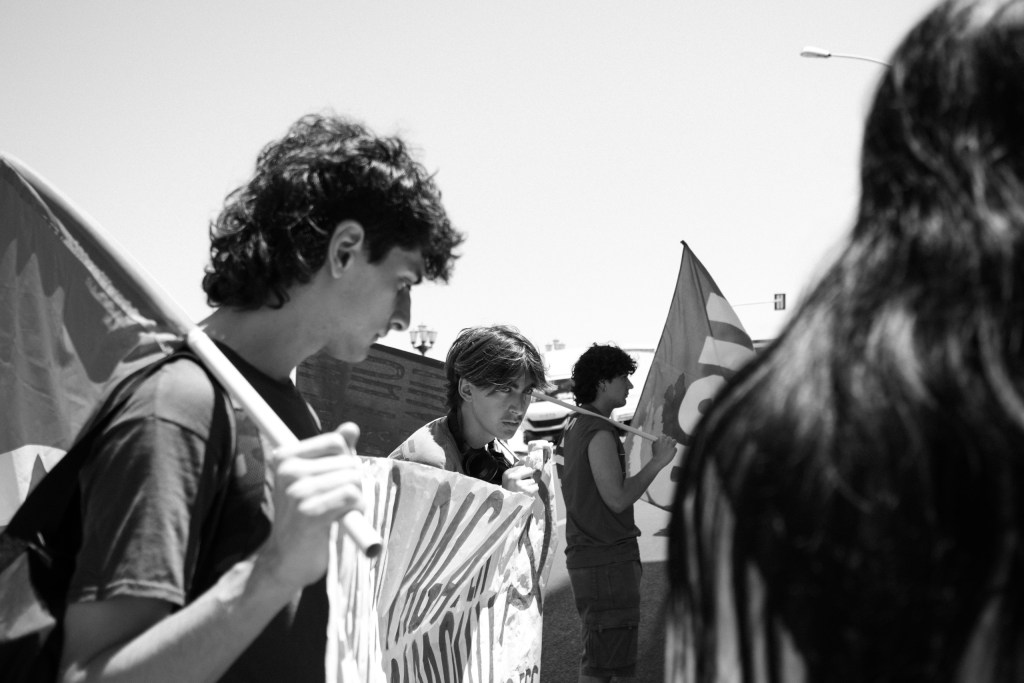
The march moves along the lungomare toward the Palazzo della Regione Puglia. A younger bloc falls in behind — a hand-painted sheet held between two lampposts: we won’t pay for your crisis. no more bombs. we need hospitals.
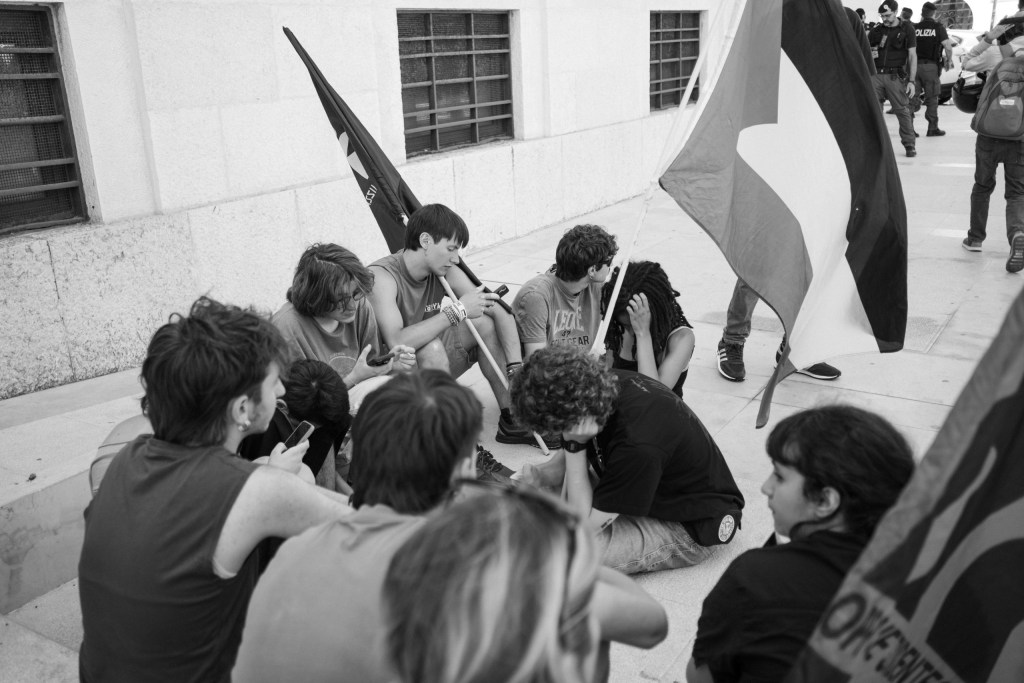
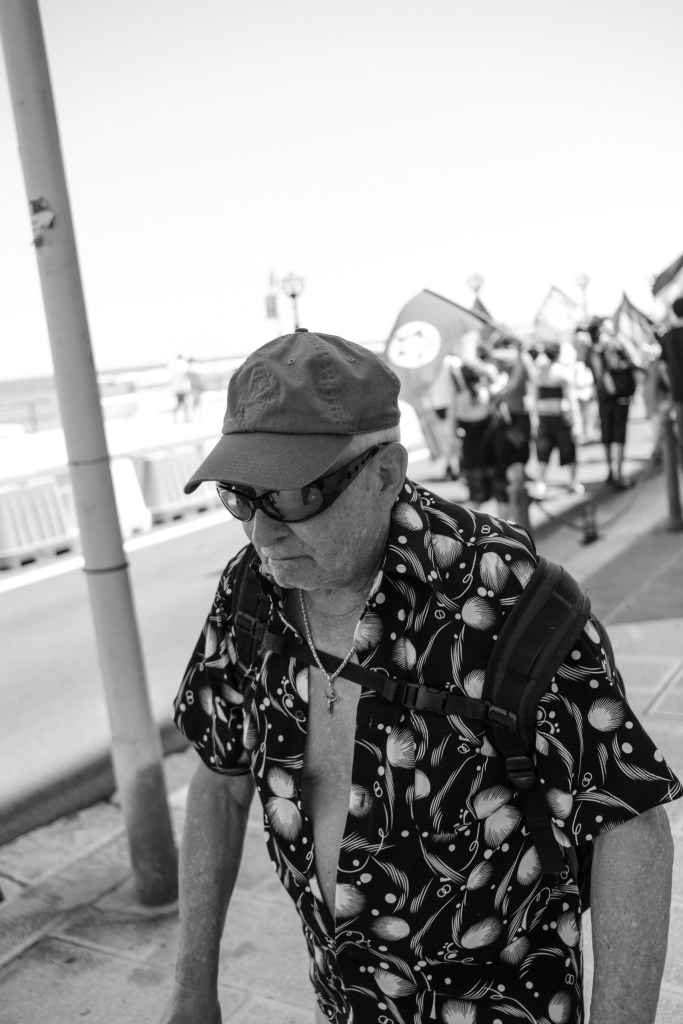
By the time the police line comes into view outside the regional building, the color drains from the frame. Not literally — but something in the register shifts, and black and white feels like the more honest way to document it.
This isn’t a story about the mechanics of a tax bracket, even if those numbers set the day in motion. It’s a story about who ends up marching when a bill for a public deficit comes due — and who’s asked to pay it.