Meloni Vattìnn
Bari,4th September 2026
On September 4, 2026, the Italian government led by Prime Minister Giorgia Meloni marked 1,413 days in office, becoming the longest-serving executive in the history of the Italian Republic. The occasion was celebrated with an official rally staged at the port of Bari, where a stage was set up on the terminal grounds for the Prime Minister’s address.
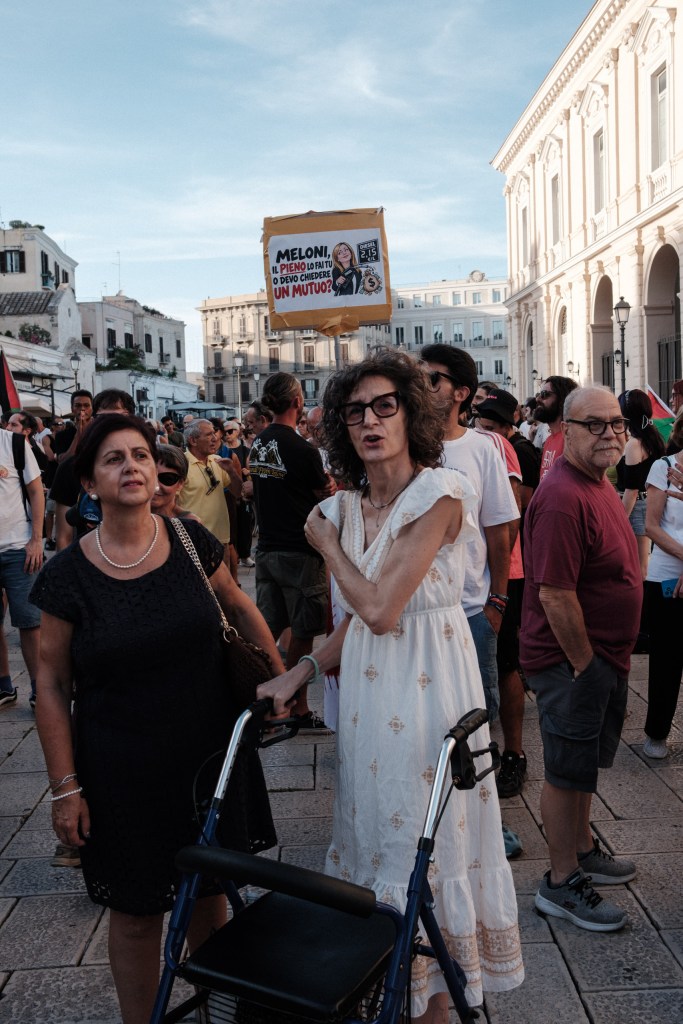
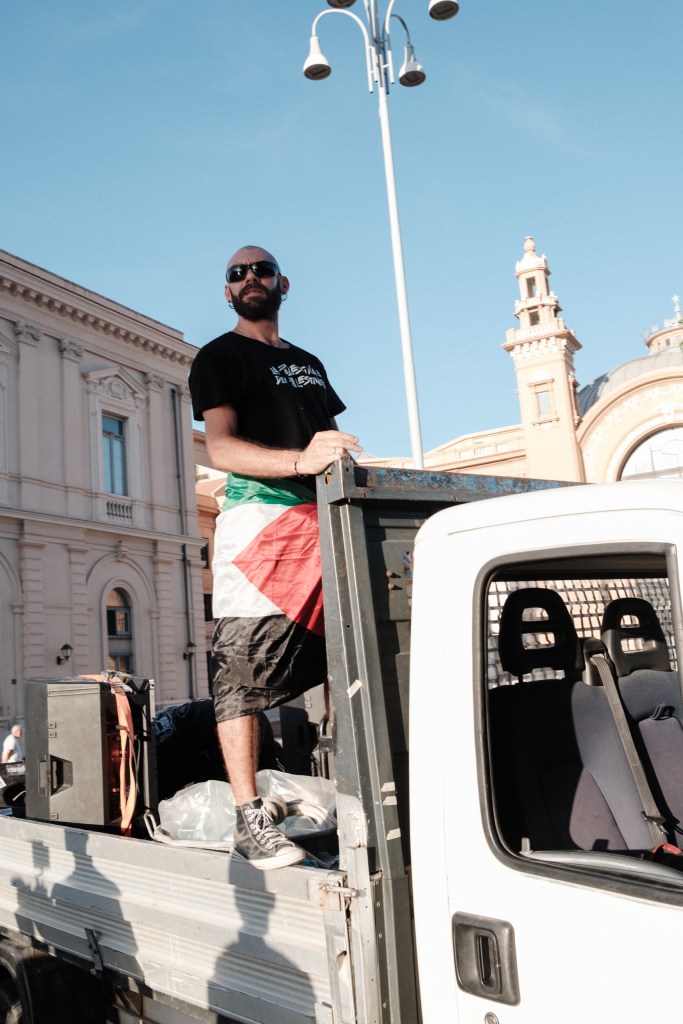
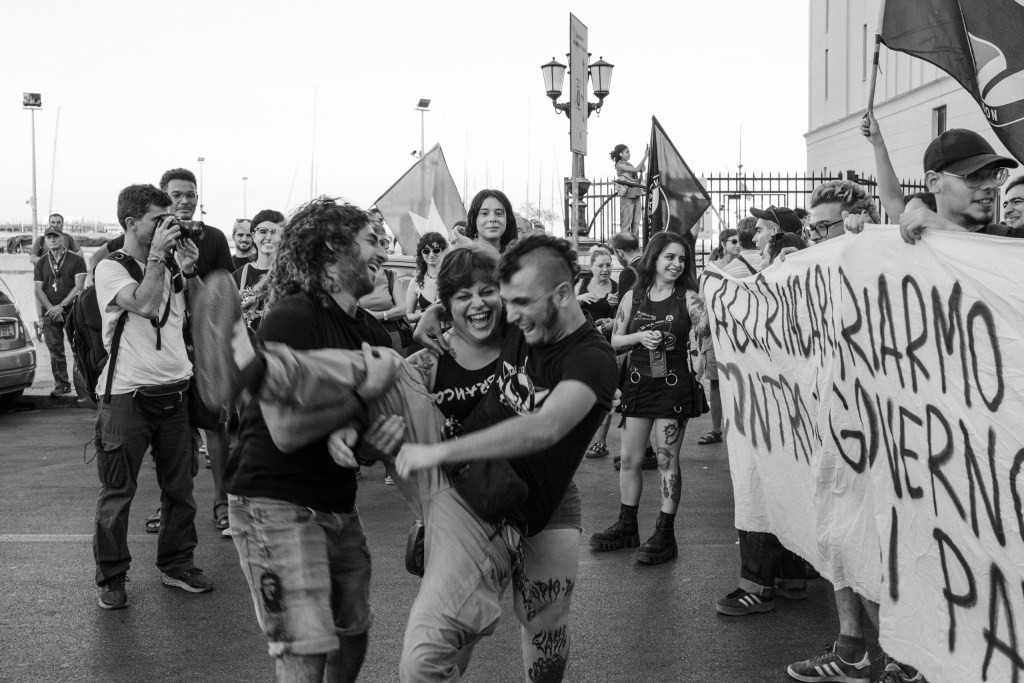
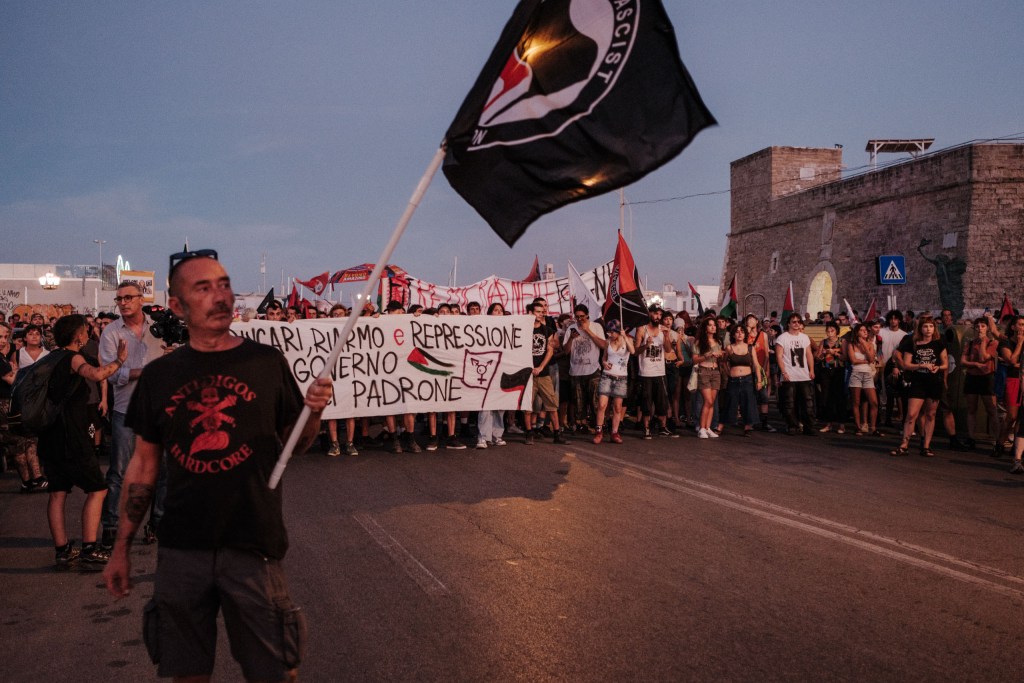
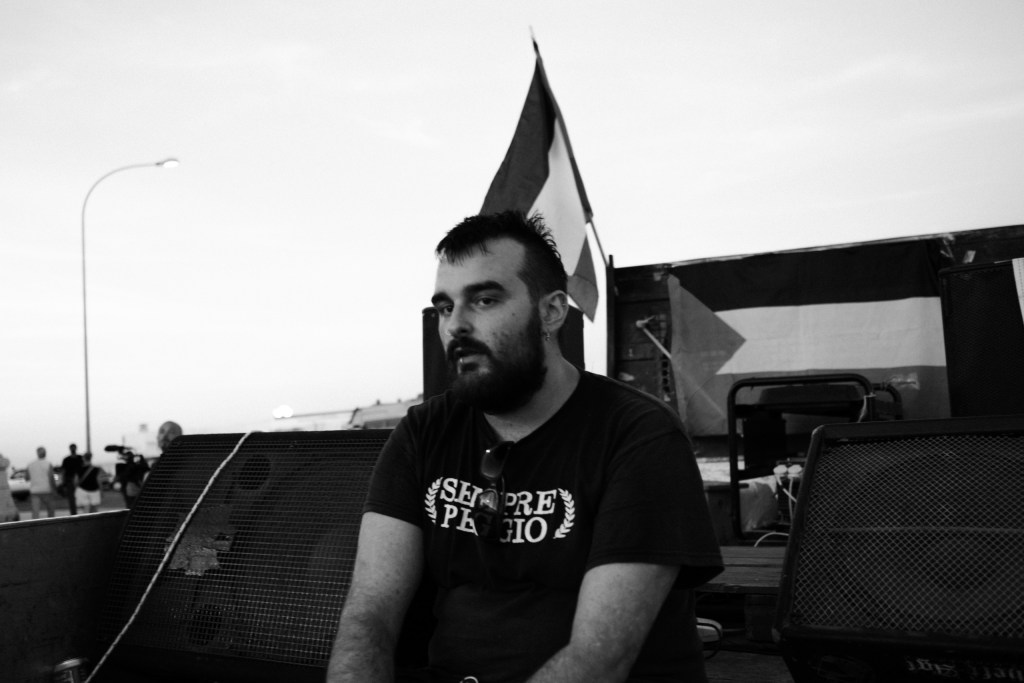
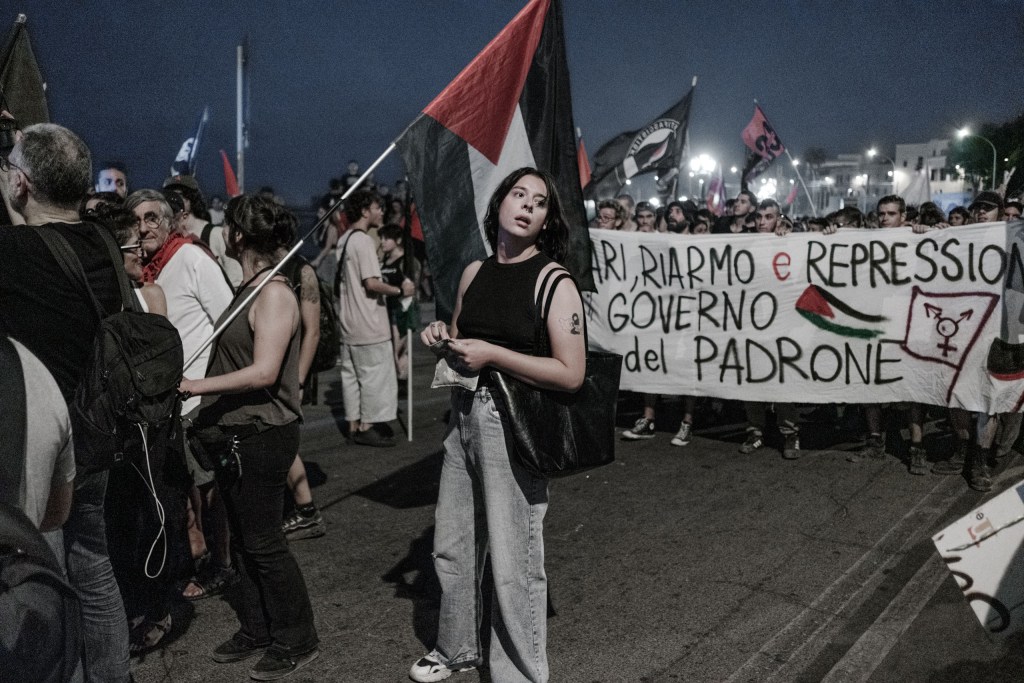
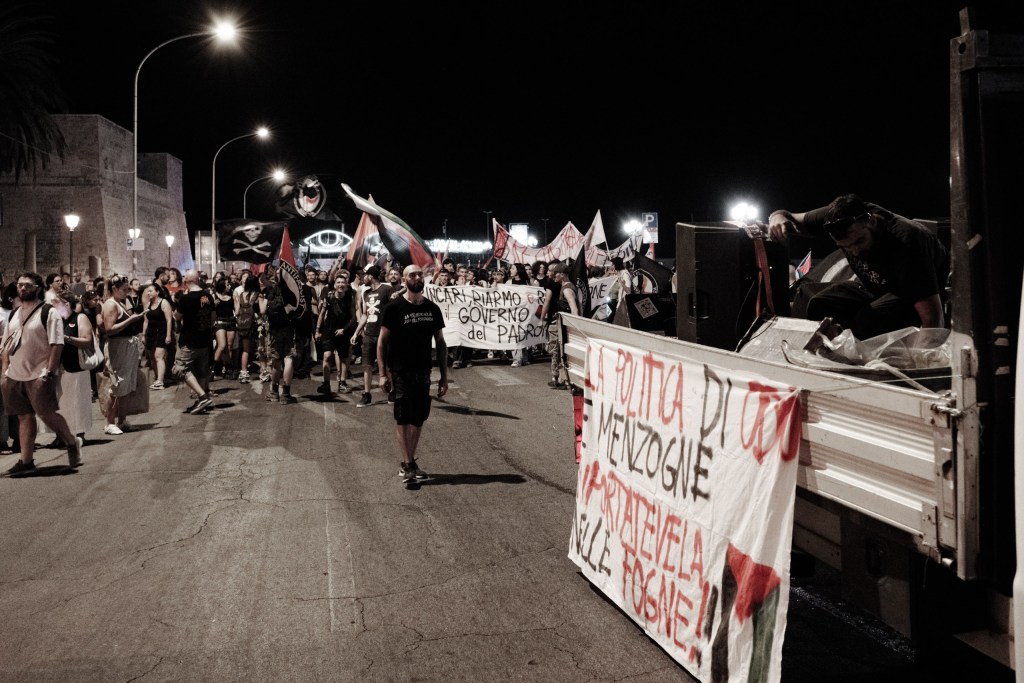
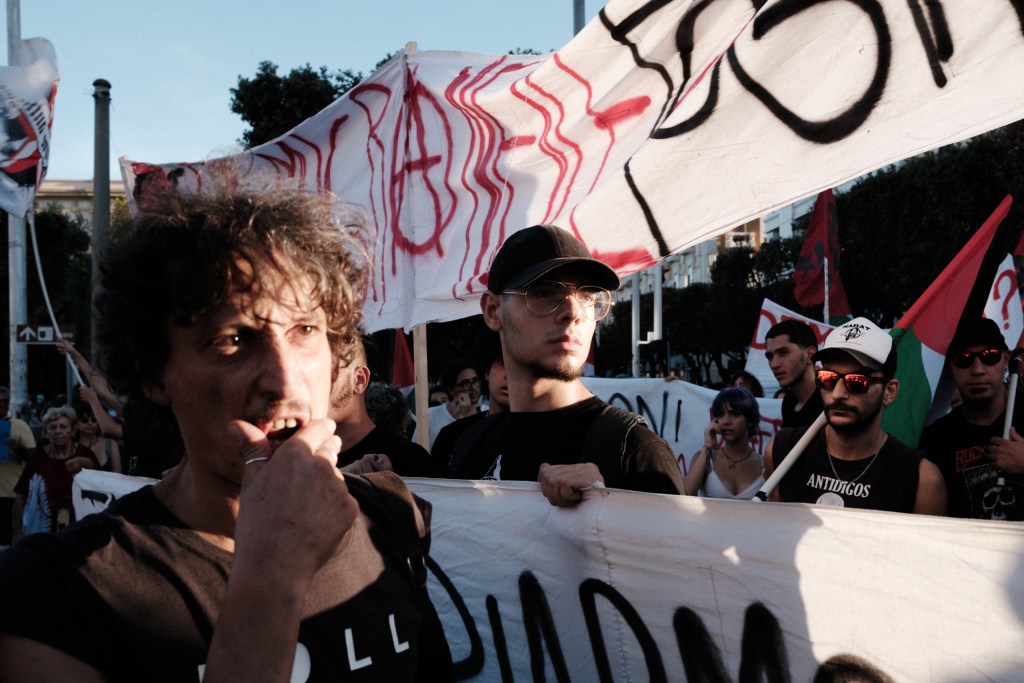
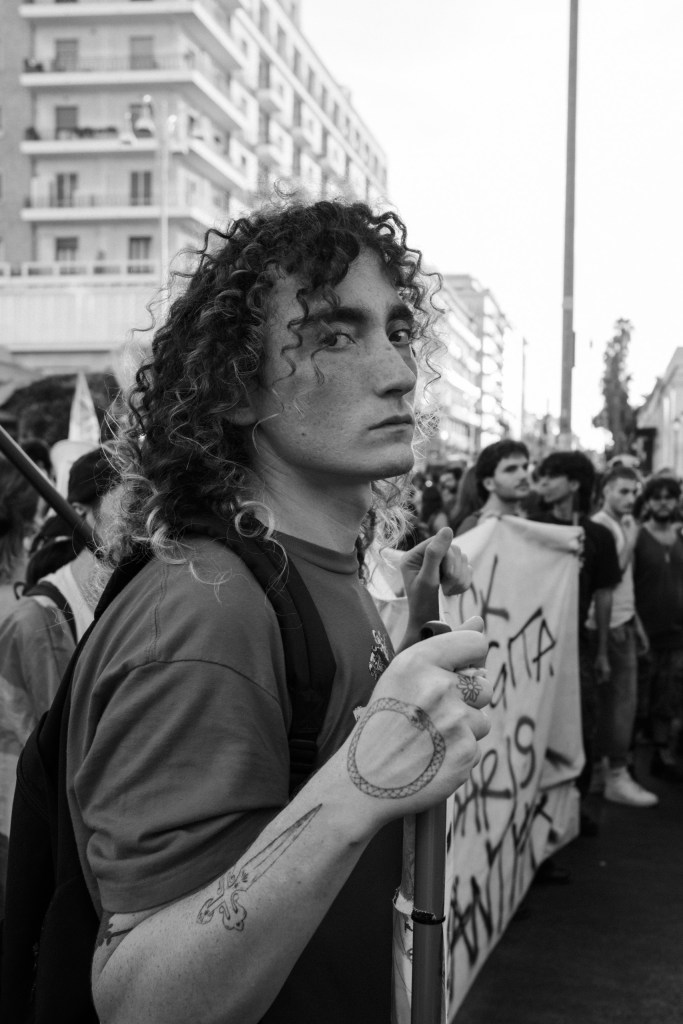
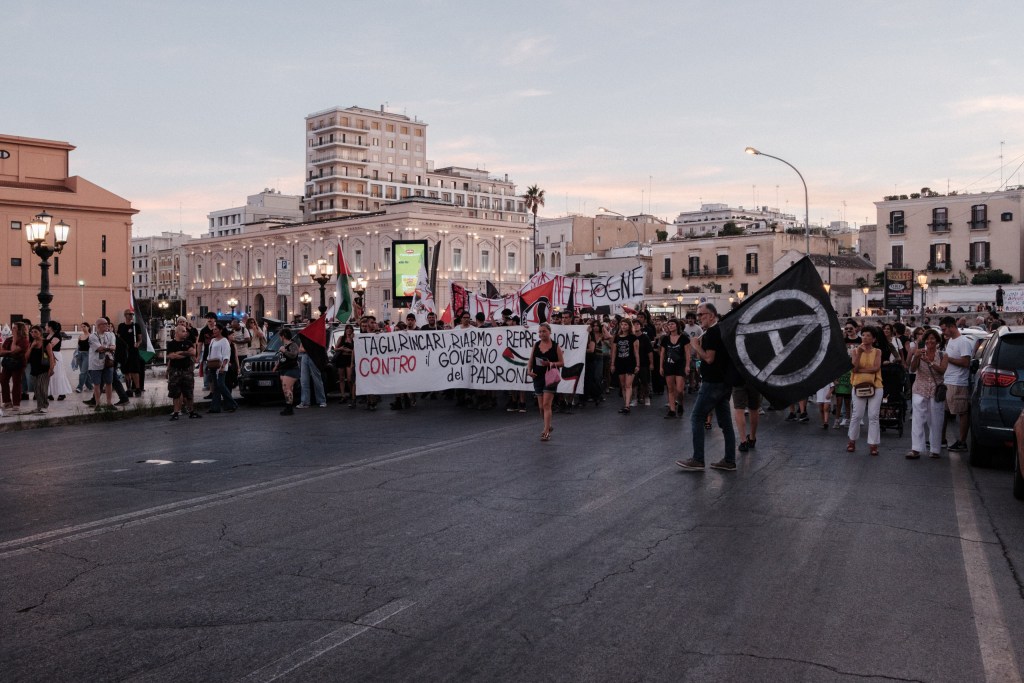
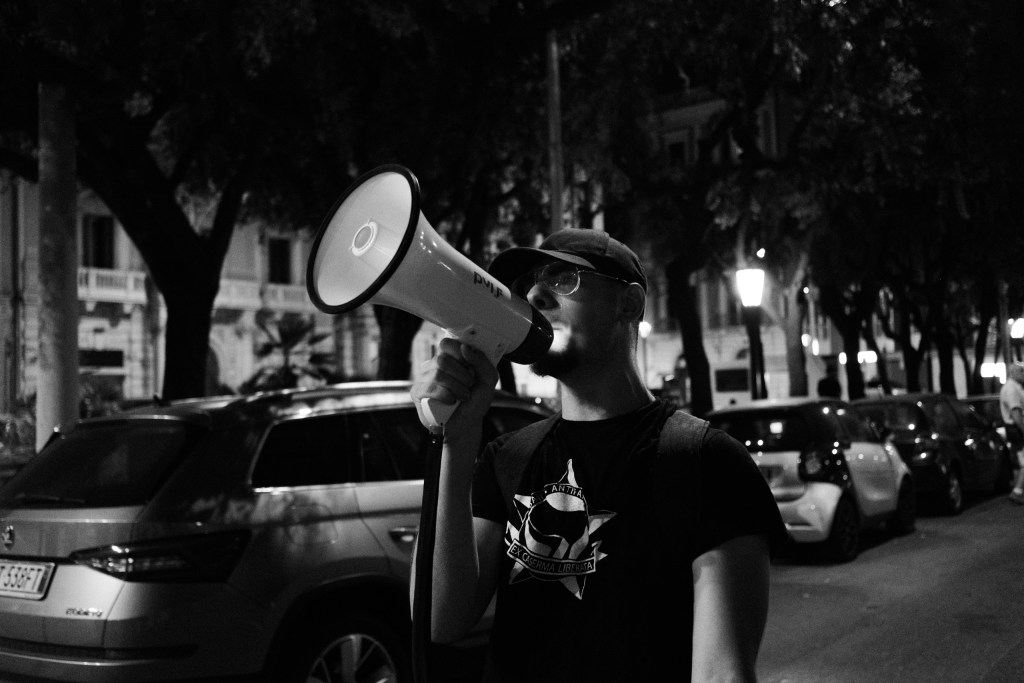
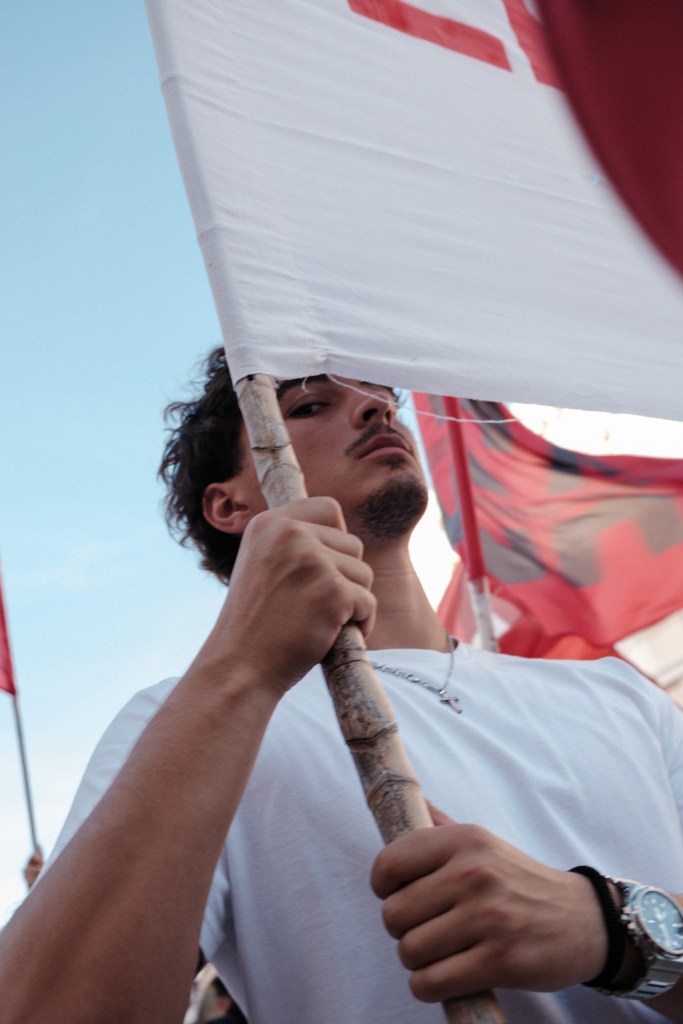
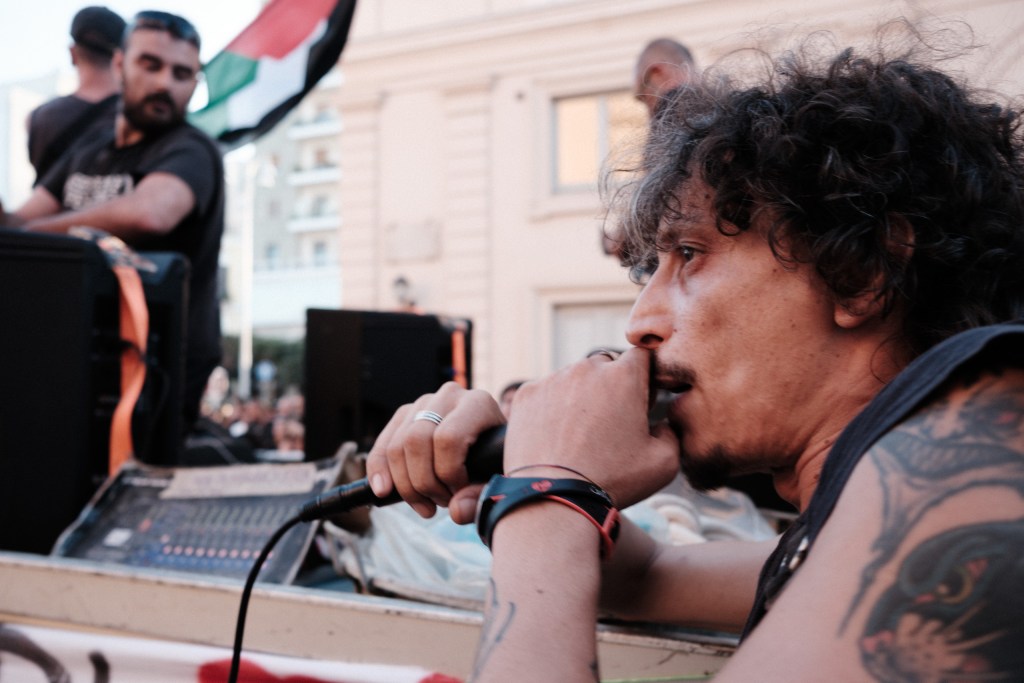
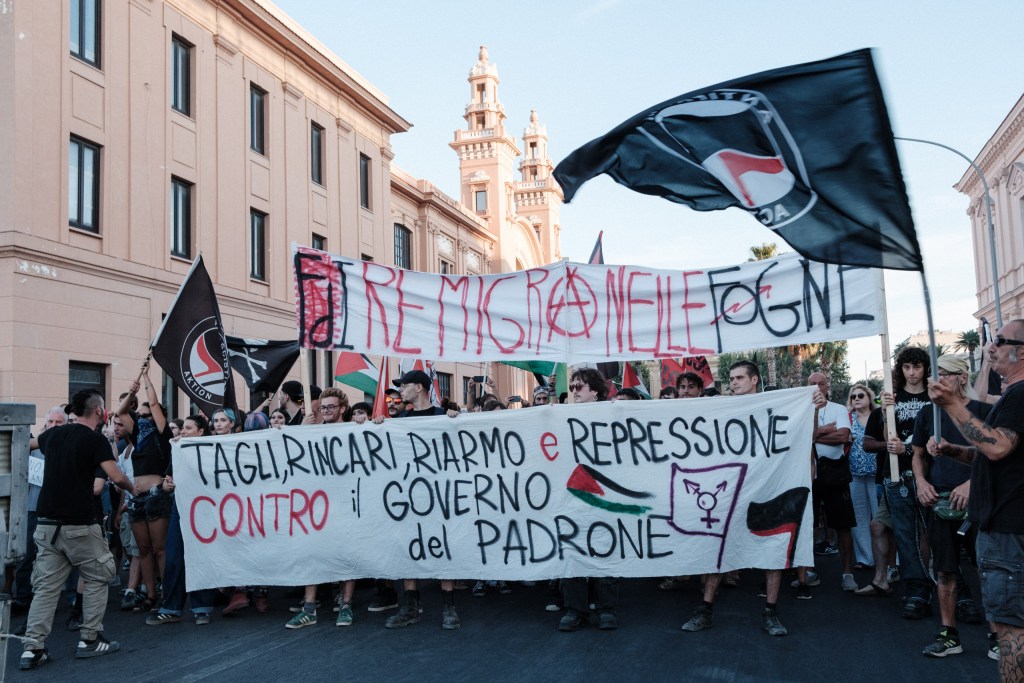
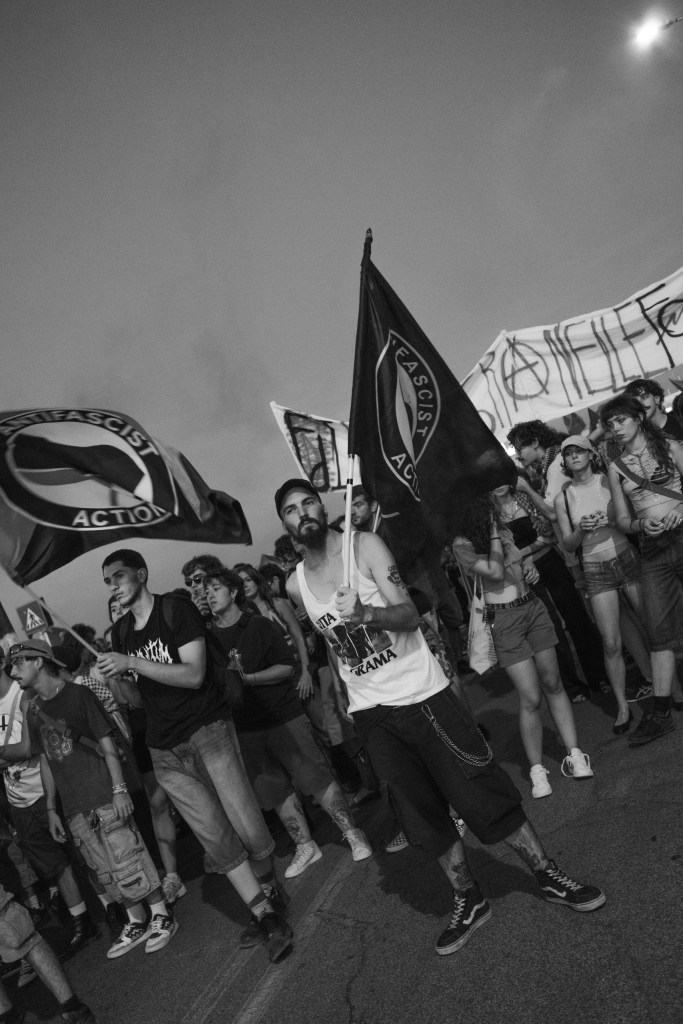
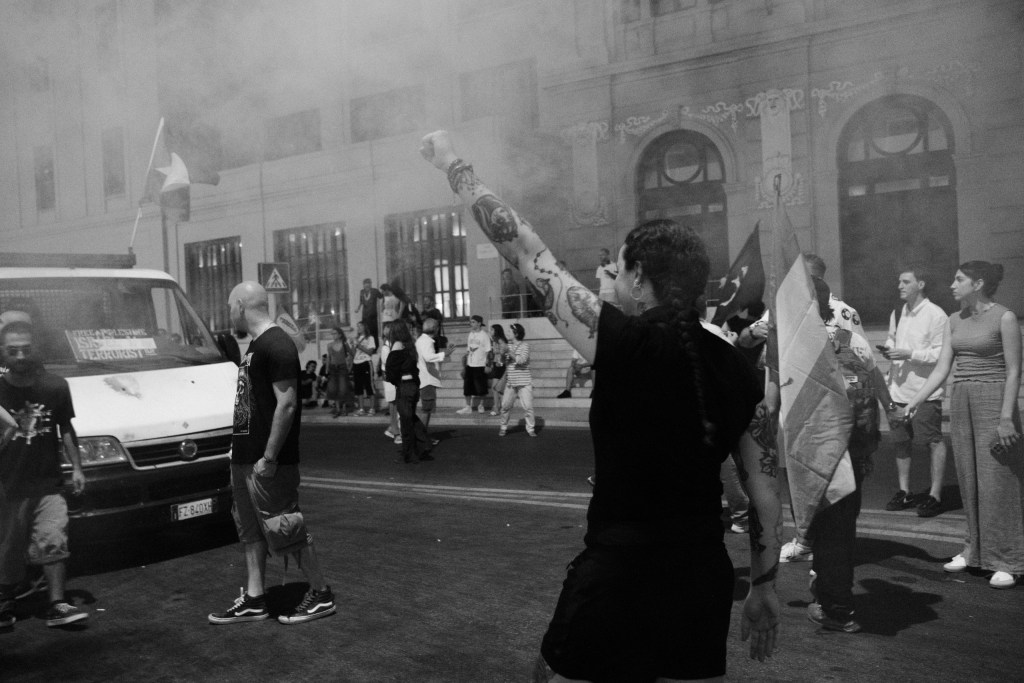
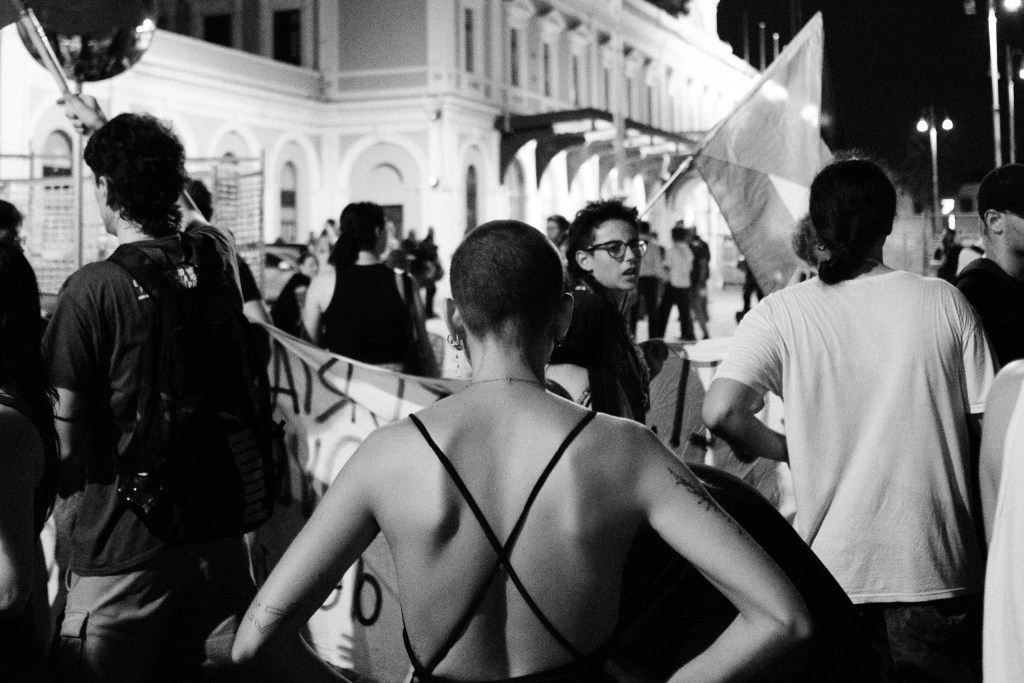
The same afternoon, a coalition of movements, unions, and collectives gathered in Piazza del Ferrarese to contest the celebration. Cambiare Rotta, OSA, Ex Caserma Liberata, USB Bari, Assemblea Bari Palestina, Potere al Popolo, and Alternativa Comunista, among others, led a march that grew to several hundred people, carrying banners denouncing budget cuts, price hikes, rearmament, and what organizers called “the boss’s government.” Local authorities had restricted the march’s route, keeping it well short of the port itself, and had banned vehicle traffic and stopping on the street housing the Israeli consulate.
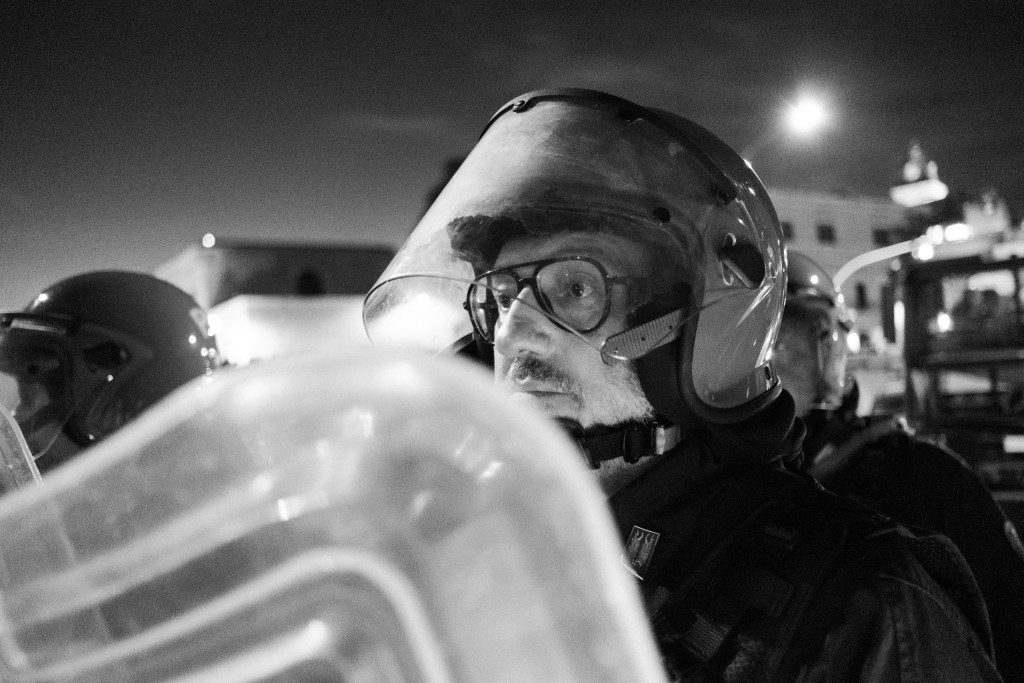
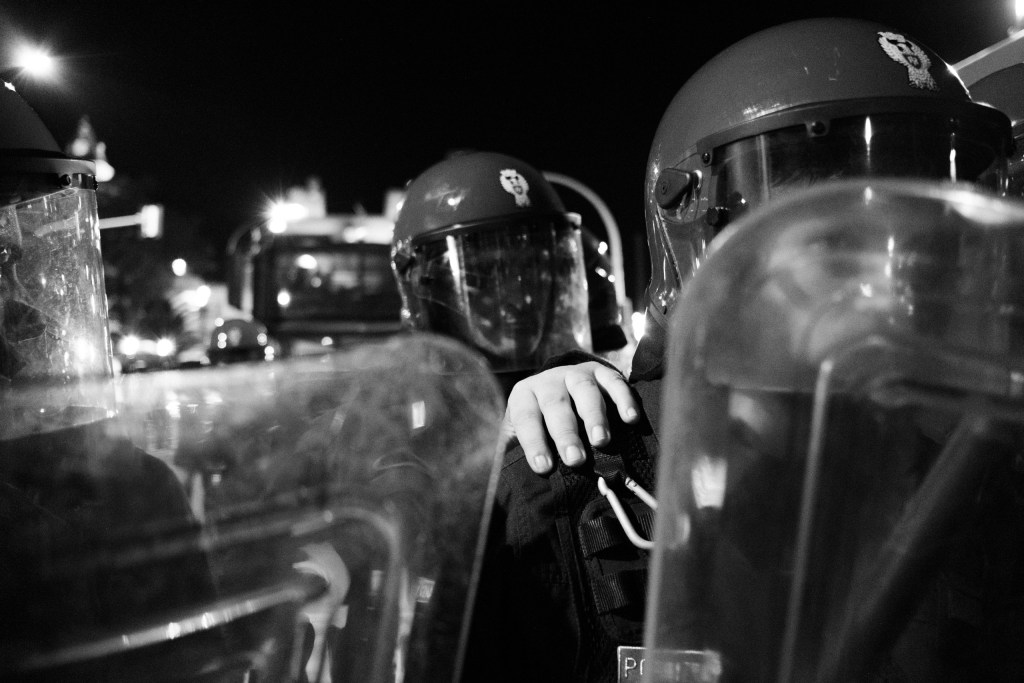
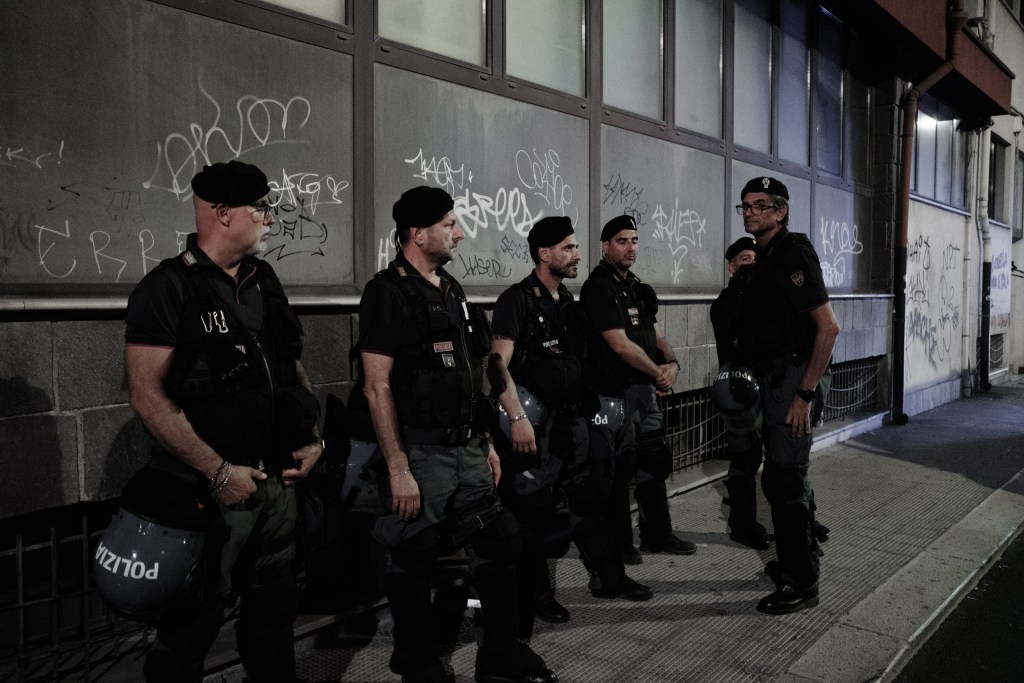
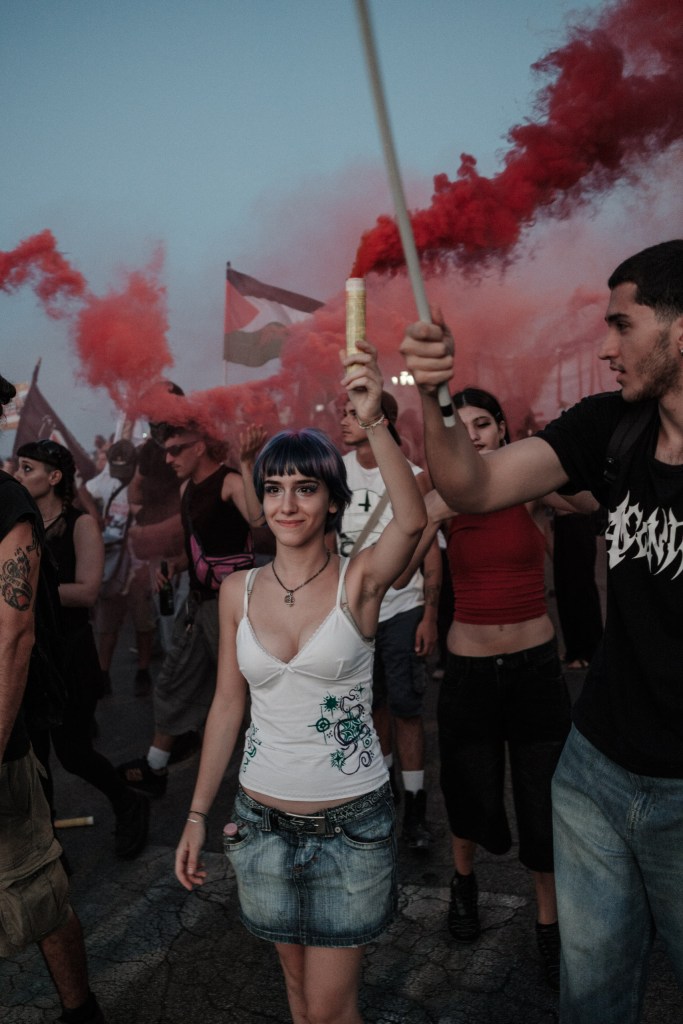
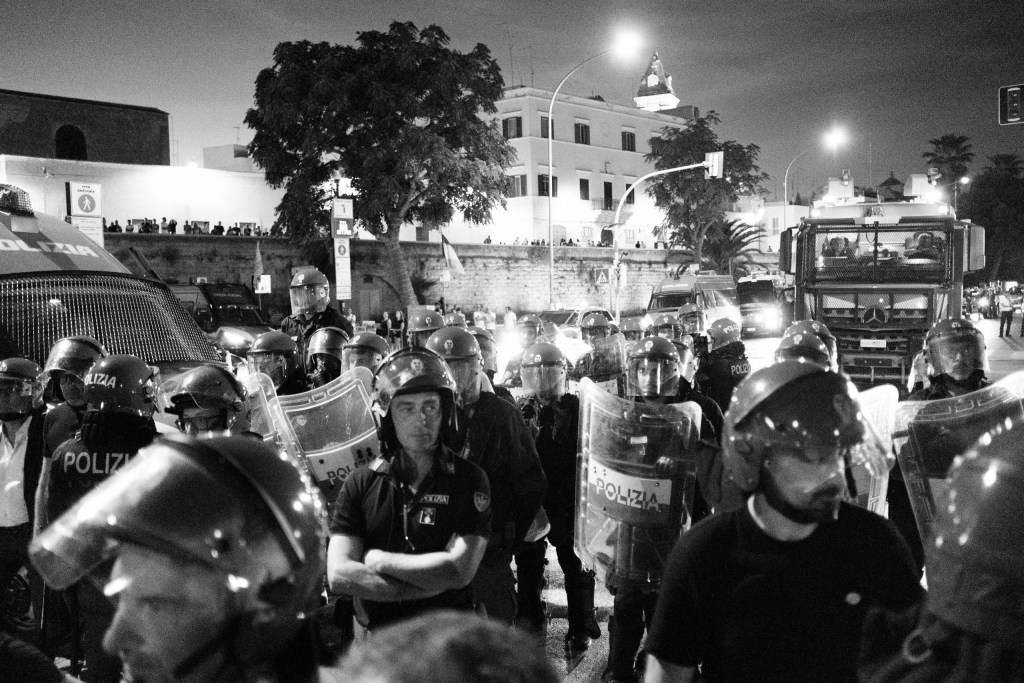
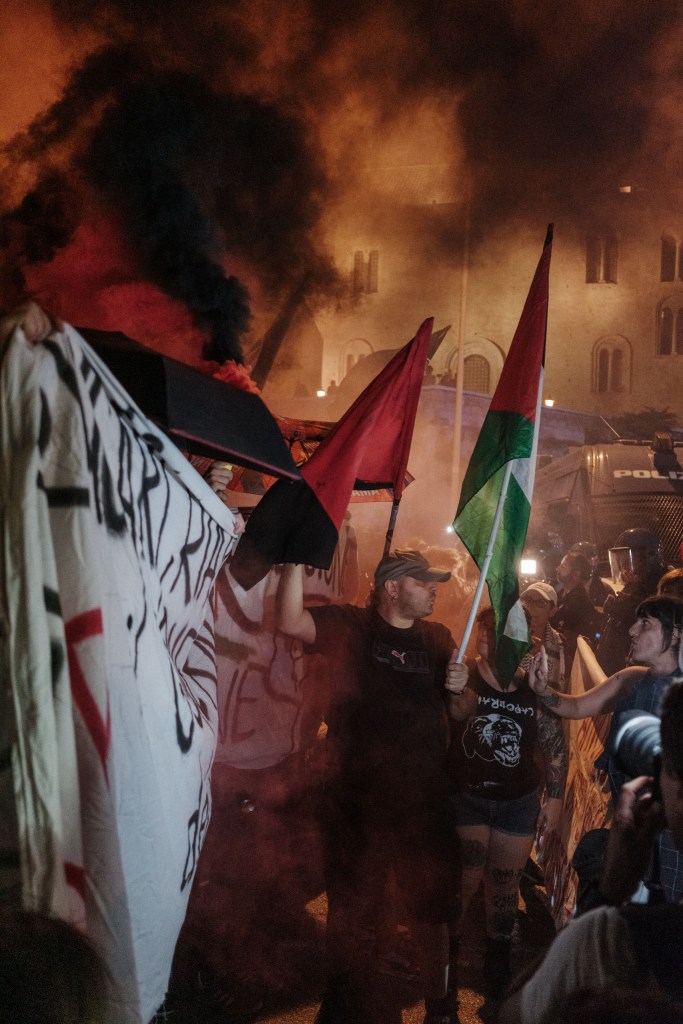
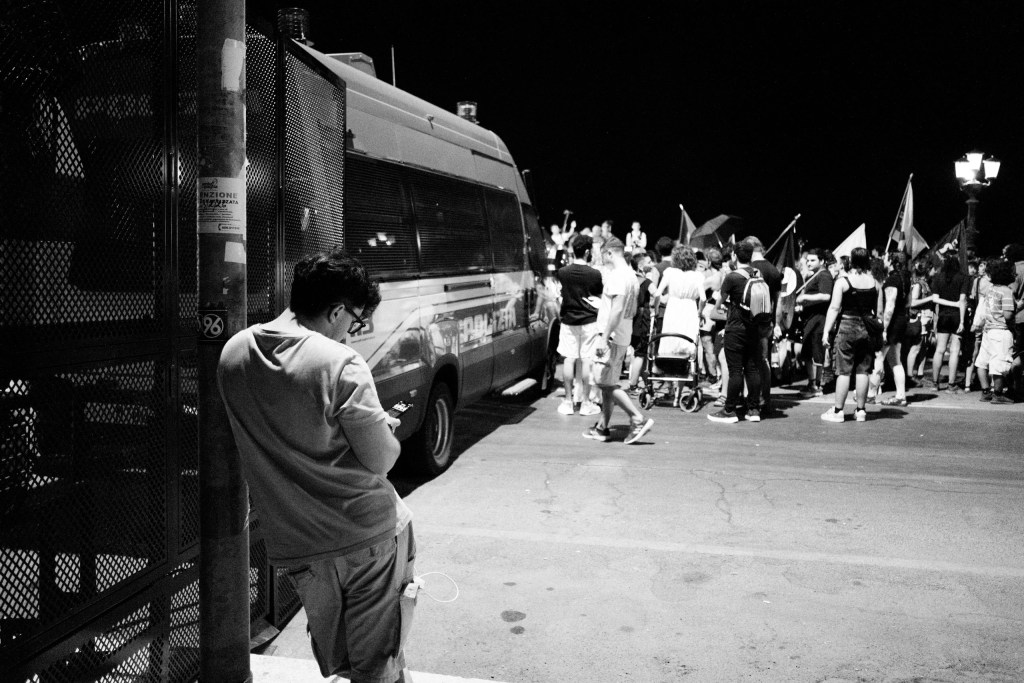
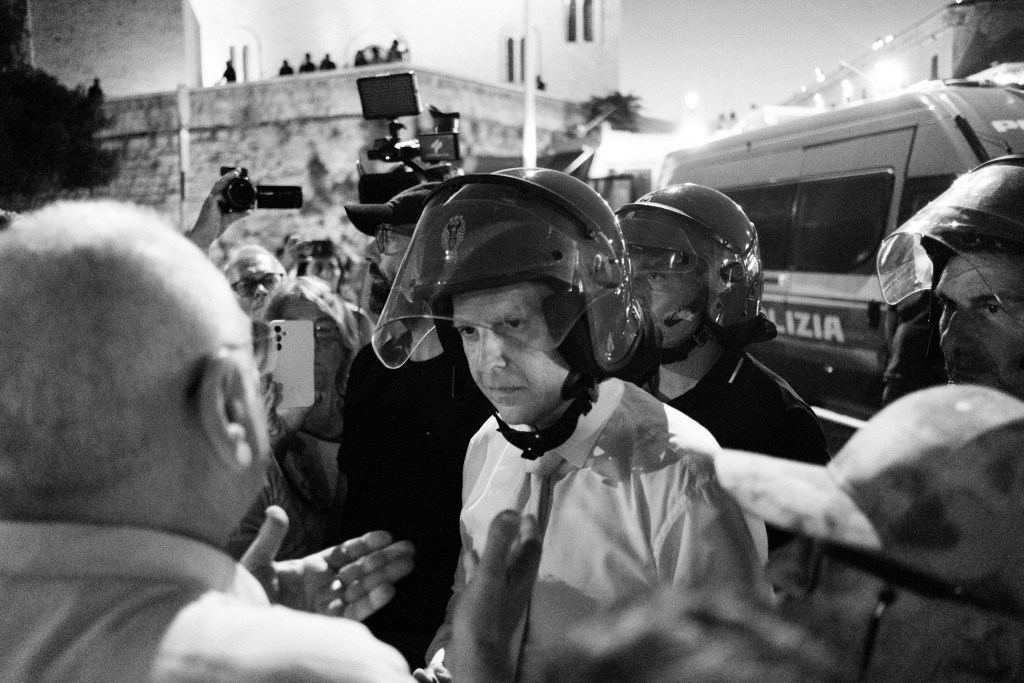
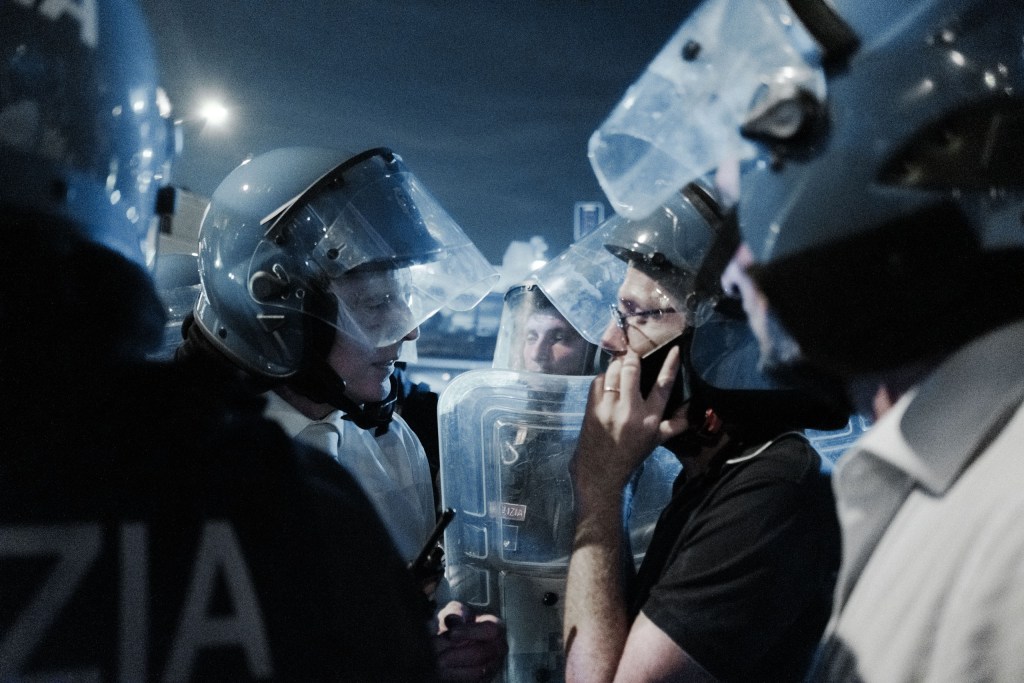
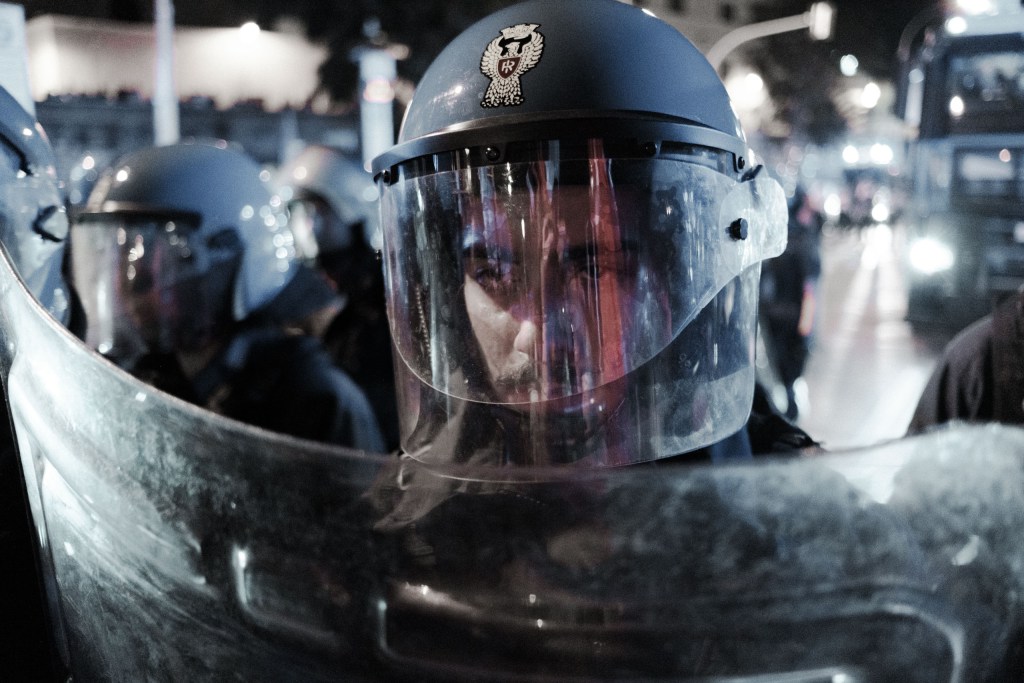
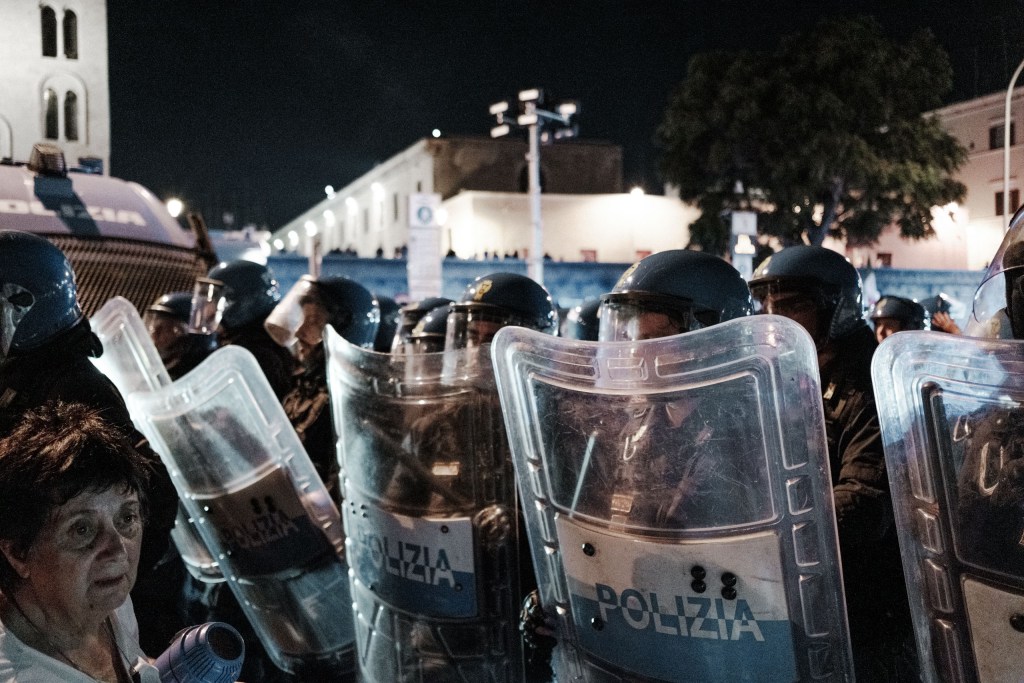
The march reached the Basilica di San Nicola in the early evening, where it was stopped by a line of police in riot gear and armored vans. Chants and flares continued at the barrier, but the standoff stayed without physical confrontation. Eight people were taken into preventive custody over the course of the afternoon and evening, according to organizers: three while still making their way to the demonstration, and five more later in the day. Upon learning of the detentions, the march broke from its authorized route and moved, without prior coordination, toward Bari Centrale train station, where the five detained members of the Clown Army were subsequently released.
Preventive custody of this kind has become a recurring feature of protest policing in Italy since the passage of the 2025 security decree, which expanded the grounds on which demonstrators can be detained ahead of, rather than during, an act of dissent. What unfolded in Bari that evening was not an isolated incident so much as a visible instance of that shift: a crowd that came to contest a government’s record found part of its own record made, that same day, at a police station.